
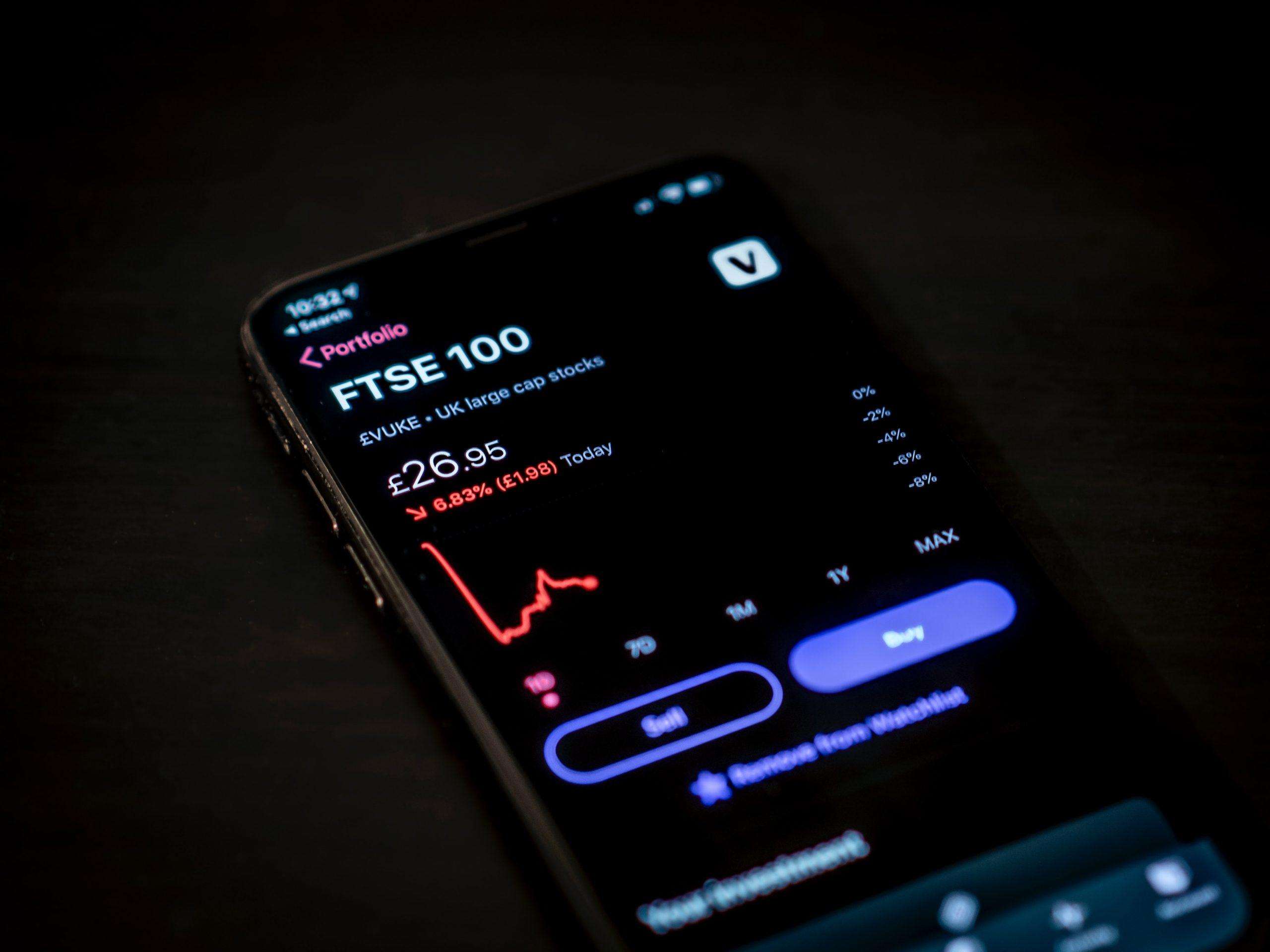
Economists around the world have labelled the on-going pandemic a true black swan event. A situation seems highly improbable, yet it happens. Events are extremely surprising and lead to serious aftermath. The past few months have proven to be exactly that.
Why does the coronavirus have an impact on financial markets?
The global economy is a very complex mechanism that, paradoxically, can be disrupted relatively easily. If one element begins to work improperly or stops completely, then it’ll have an impact on the remaining parts of the system. This is widely known as the “domino effect”.
When China stopped production in their factories as a result of the pandemic, it quickly became apparent that European factories couldn’t operate normally either as they lacked key components imported from China. On the other hand, supply shortages caused European entrepreneurs to reduce or stop performing their business activities altogether. As a result, some employees had to go on compulsory leave or were dismissed. This, in return, caused the shared prices of listed companies to drop. It’s a simple loop – no production equals no income which leads to a decrease in the value of the whole company.
It’s not only about factories
Due to the fact that the situations described above weren’t individual cases, the influence of COVID on financial markets encompassed entire stock indices. As you know, not only manufacturing companies have been affected. Because of numerous restrictions put in place to prevent the spread of the virus, transport companies (mainly airlines) as well as hotels and restaurants had to suspend business operations virtually overnight. Not to forget the numerous shops and companies operating in the broadly defined entertainment industry. The list seems to be endless.
The impossibility to operate at full capacity, and thus to generate profits, isn’t the only reason for the losses. The panic of a significant part of investors who, in the face of drops in the market, tried to sell their shares and invest in more secure investments such as gold, added fuel to the fire. It’s natural that increasing the supply of a given good (specifically shares), will lead to a drastic drop in prices and that’s what has been observed as one of the impacts of the coronavirus on financial markets. At some point it was possible to purchase shares of certain companies at exceptionally low prices. The main stock indices, both in Europe and in the United States, have lost several percent of their value. Moreover, the difficult situation of numerous businesses was additionally exacerbated by huge exchange rate fluctuations due to which cross border payments were more expensive than usual.
The coronavirus impact on financial institutions
The financial market isn’t solely about the stock exchange and companies. It also comprises of a wide range of financial institutions, such as banks. So how have these institutions been affected by the coronavirus? Well, as expected, some credit recipients have had a difficult time paying their debts back. This includes both individuals and companies. Millions of people around the world have been experiencing financial challenges due to salary cuts. Moreover, some of them are even left without any income whatsoever, making it very difficult, if not impossible, for a majority of people to repay their debts.
The issue concerning the on-time repayment of credit installments has been addressed by numerous governments through the introduction or the development legal solutions intended to support credit recipients. These solutions include such regulations as the ones implemented in Italy that allow people to defer payment of installments without any penalties or additional interests. However, although such an approach is beneficial for credit recipients, banks don’t find it as appealing. Due to these regulations, they have to cope with lower accounting liquidity. Banks are also certainly aware that the impact of the coronavirus on financial markets will lead to a situation when some people or companies won’t be able to pay the borrowed money back and will consequently declare bankruptcy. This, in turn, will translate into a lower propensity of banks to grant loans in the near future which will hinder investments, development of companies as well as the creation of new jobs. This is a really vicious circle, as the combination of all these elements is necessary to bring the world economy back to its pre-pandemic levels.
The take-home message
Closed borders, suspended flights, disrupted supply chains – all these are unprecedented situations. We got used to a “borderless” world, with full ease of movement of people and goods. Now entrepreneurs are doing their best to learn how to function normally in the new reality in order to survive and wait for more prosperous times. It’s hard to predict whether the worst is behind us, or is yet to come. Only one thing can be stated for sure – economists will spend decades analyzing the influence of the coronavirus on financial markets.